We use cookies to make this site work. We'd also like to set optional cookies so we can understand how the site is used and improve it. We will not set optional cookies unless you accept them. You can change your choice at any time from the Cookie settings link in the footer.
Strictly necessary cookies
These cookies are required for the site to work. They store your cookie preferences and keep your session secure. They are exempt from consent under PECR Regulation 6(4) because they are essential to deliver the service you have requested.
Optional cookies
Optional cookies help us understand how the site is used and provide additional features such as analytics, accessibility tools and translation. We will only set them if you accept.

Brandt Daroff Exercises
Benign Paroxysmal Positional Vertigo (BPPV)
Benign Paroxysmal Positional Vertigo is a common cause of dizziness
- Benign – this means the cause of dizziness is not a threat to your health.
- Paroxysmal – the dizziness comes in short bursts.
- Positional – the dizziness is provoked by certain body or head positions.
- Vertigo – the medical name for the spinning sensation.
Caused by tiny crystals in the inside of your ear responsible for balance - sometimes they become dislodged - this can be due to infection/injury or often there is no reason in particular.
Once the crystals are loose, putting your head into certain positions can cause the crystals to move, making your brain think you are moving even though you are not which causes BPPV symptoms.
Exercises
Brandt-Daroff exercises are a series of simple movements that can help stop the dizzy spells that people with BPPV. Some evidence suggests that the exercises help to relocate the loose crystals that cause the dizziness. However, other evidence suggests that repeated exposure to the feeling of dizziness reduces its intensity.
You can perform these exercises in your own home.
We recommend that you have a friend or family member present the first few times you perform these exercises to help you in case you become unsteady.
Pick a location where your feet can comfortably reach the floor when you are sitting to steady yourself, such as your bed
How to perform these exercises
- Start the exercises by sitting upright on the edge of a bed.
- Turn your head 45 degrees to the left (or as far as is comfortable).
- Quickly lie down on your right-hand side. Remain in this position for 30 seconds (or until you no longer feel dizzy).
- Sit up and turn your head back to a central position (facing forwards).
- Turn your head 45 degrees to the right (or as far as is comfortable).
- Quickly lie down on your left-hand side. Remain in this position for 30 seconds (or until you no longer feel dizzy). Sit up and turn your head back to a central position (facing forwards).
Watch an instructional video on how to perform the exercises
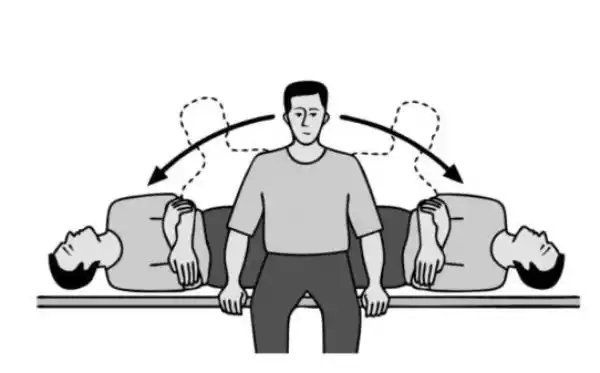
We recommend following the schedule
Every day for two weeks:
- Morning: five repetitions
- Afternoon: five repetitions
- Evening: five repetitions
What to do next?
If your symptoms are not settling after 2 to 4 weeks then please make a further appointment to discuss with your doctor to discuss other treatments.


Providing NHS Services
The Practice
Quick Links
Rolle Medical Partnership
Exmouth Health Centre
Claremont Grove
Exmouth
EX8 2JF
Telephone: 01395 226540
Treetops Surgery
Prince of Wales Drive
Exmouth
EX8 4SW
Telephone: 01395 226540
Raleigh Surgery
33 Pines Road
Exmouth
EX8 5NH
Telephone: 01395 226540
Underhill Surgery
Lympstone
EX8 5HH
Telephone: 01395 265797